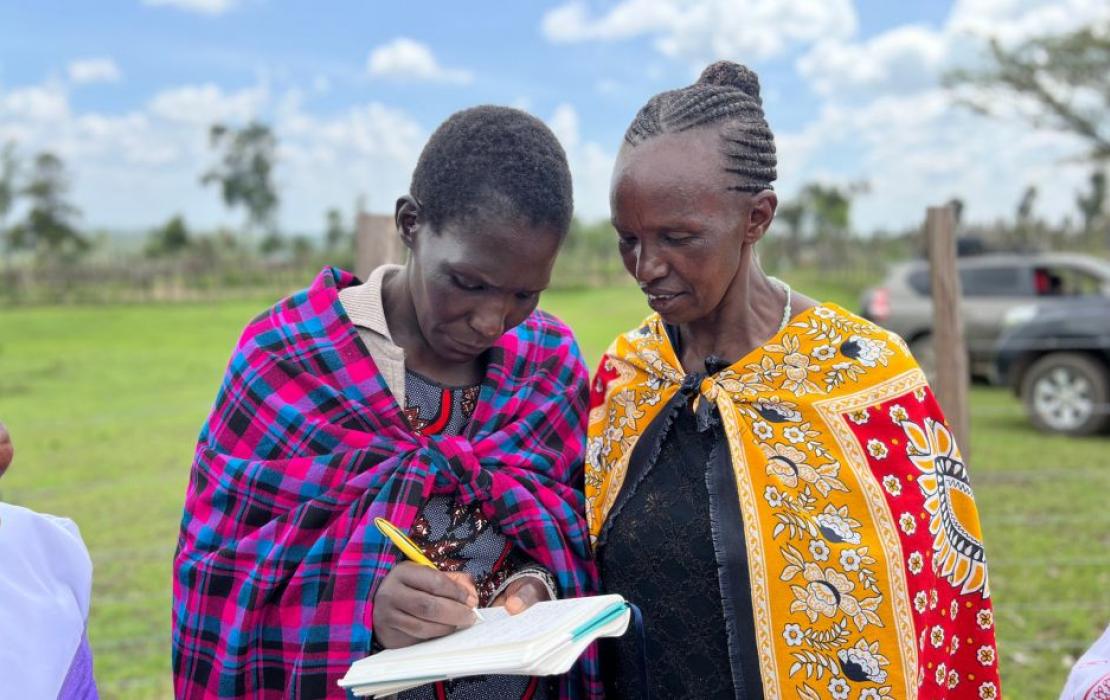
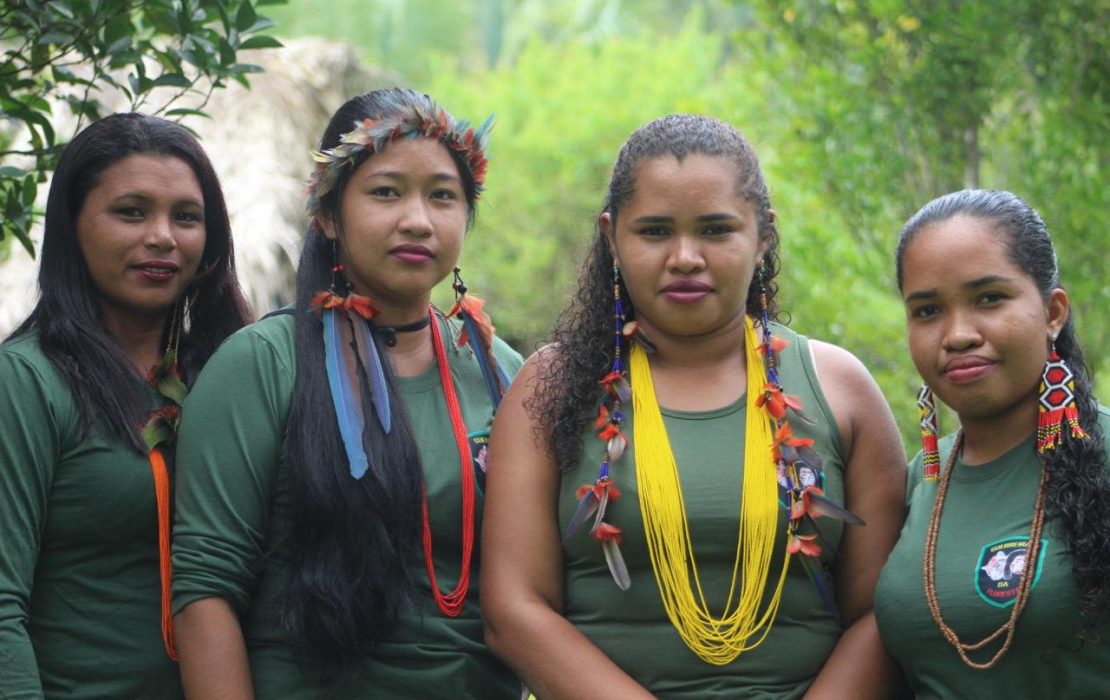
Photo: W+ Standard India


What is the W+ Standard?
The W+ Standard tracks change across six domains of women's empowerment: time savings, income and assets, education and knowledge, leadership and decision-making, food security, and health and wellbeing.A project chooses which of these domains it wants to measure, gathers baseline data on women's lives, and then compares that baseline against outcomes at the end of the monitoring period. One W+ credit represents a 10 percent improvement in one woman's life against that baseline, verified by an independent third-party verifier before it is issued and tradable.
Those credits can then be sold on their own or stacked alongside the carbon, biodiversity or water credits generated by the same project, letting a single piece of land or a single cooperative address several Sustainable Development Goals (SDGs) in one transaction.
What sets W+ apart is what happens to the money: At least 20 percent of the revenue from every W+ credit sold flows directly back to the women's groups involved in the project, to be spent on whichever community and climate priorities the women themselves identify. Since its founding, the W+ Standard has issued $3.5 million worth of credits tied to verified improvements in the lives of more than 200,000 women across 25 projects in 14 countries, spanning Africa, Asia and Latin America, from community-led forests in Kenya to rural energy programs in Nepal and Cameroon and many more.
Three projects, one restoring shea parklands in northern Ghana, one paying communities for forest conservation in Costa Rica, and one on generating income from solar energy in India, show what this concept looks like in practice.

Turning knowledge into income in Ghana's shea landscapes
The Ghana Shea Landscape Emission Reductions Project (GSLERP) is restoring degraded shea parkland across the country's north while rebuilding the livelihoods of the women who depend on it. Led by Ghana's Forestry Commission with the Global Shea Alliance and UNDP, and funded by the Green Climate Fund, the project has focused on three main areas: sustainable natural resource management, cooperative and entrepreneurial development, and improved shea processing techniques. It has trained more than 6,000 women in these skills and has become the first Green Climate Fund project to apply the W+ Standard, tracking gains in women's knowledge and income across the value chain.

Photo: W+ Standard Ghana

Photo: W+ Standard Ghana
In Ghana's shea landscapes, project training translated directly into higher incomes and sharper technical confidence. Through W+ Standard use, the project was able to verify that women’s confidence in explaining tree health rose from around 20 percent to nearly 84 percent. Women’s incomes in Ghana’s Northern Region have climbed to 156 percent, while 91 percent of women surveyed reported an income increase overall, with most reinvesting it in their businesses, education and health rather than treating it as one-off relief.
"It is important for the women to be involved because the income we get from these activities is used to take care of the children, their education, livelihoods, family matters, and more," says Hajia Rabiatu Abukari, director of Ripples Ghana, one of the project's implementing partners.

Women's leadership in Costa Rica's forests
Costa Rica's REDD+ Results-Based Payments project, backed by a $54.1 million Green Climate Fund grant has produced particularly strong women's leadership outcomes, according to W+ verification results.
The W+ Standard helped improve women’s leadership by 173 percent from baseline conditions. Through collective spaces such as the National Forum of Rural Women and territorially embedded processes linked to the Territorial Forest Action Plans (PAFT), women enhanced their ability to mobilize others, navigate resistance, communicate across diverse interests, and influence organizational and governance outcomes.


This was reinforced informally through peer networks, including WhatsApp groups, that helped women navigate the emotional demands of new leadership roles. "Unity, representation and collective strength," is how Ana Patricia Ruiz Cambronero describes what the forum gave women, creating political weight behind their issues that had previously gone unheard.
Post-project, most women reported feeling capable of communicating their ideas and vision, being recognized for their actions, and being trusted by their communities. Additionally, rural women reported the highest levels of self-confidence and community trust, at 95 percent and 86 percent respectively.

From diesel debt to solar income in Gujarat’s salt flats
In the Little Rann of Kutch, a 5,000-square-kilometer stretch of salt flats in Gujarat, India, more than 43,000 Agariya families spend eight months of the year producing salt in temperatures that regularly top 45°C. Women build the crystallization pans, harden them barefoot for weeks and run diesel pumps around the clock. This labor has long been classified as unskilled even though the diesel those pumps required consumed more than 40 percent of a family's annual income and left many households cycling into new debt each season.
A financing partnership between SEWA Bank, the International Finance Corporation and Bank of Baroda replaced the diesel pumps with solar ones, registering both the loans and the equipment in women's names rather than their husbands'.
To verify that the switch was actually changing women's lives and not just their equipment, the project sought W+ certification against two domains, income and assets, and education and knowledge. Incomes rose by more than 240 percent. 97 percent of women reported proficiency running their new solar systems, with 90 percent of the project's carbon revenue flowing directly back to the women who generated it.
"Earlier, men made all decisions about salt prices. Now, I negotiate with traders and talk directly. We fix the rate together, and they respect us," one participant said.


What gets counted, gets funded
The real significance of W+ goes beyond the credit itself. By providing a rigorous way to measure, verify, and value women's contributions, the W+ Standard is helping make visible what has too often remained overlooked in climate and development finance and opening new pathways for investment in the social, economic, and environmental outcomes women help deliver.
By generating credible evidence of women's contributions and the benefits they create, the W+ Standard helps make visible the vital role rural and Indigenous women play as drivers of climate and forest solutions, while demonstrating that gender equality is not only a social objective but also a contributor to project sustainability, resilience, and long-term durability.
Donor info: The application of the W+ Standard was supported by the UN-REDD Programme in Green Climate Fund-financed and UNDP implemented projects in Ghana and Costa Rica, and by CGAP/World Bank in a carbon project implemented by the Self Employed Women's Association (SEWA) and Value Network Ventures (VNV) in India.
Donors
Explore More Stories
Indigenous women in Kenya are leading the way in forest conservation while preserving their cultural heritage.