

0.00%
Share of global GHG emissions
Based on data from Climate Watch (CAIT 2022), developed and maintained by the World Resources Institute. #92
Climate Vulnerability Index ranking
A higher number means a higher vulnerability to climate change. Based on the ND-GAIN Index (2023), developed by the University of Notre Dame. #135
Human Development Index ranking
A lower number means a better human development score. Based on the Human Development Index (2023), developed by UNDP. NDC Status
Cabo Verde submitted its third NDC in November 2025.
Key highlights from the NDC
- Cabo Verde's third NDC commits to an economy-wide greenhouse gas (GHG) emissions target of 18 percent below BAU by 2030 (unconditional) and up to 39 percent below BAU by 2035 (conditional), covering energy, transport, waste, AFOLU, and industrial processes.
- These new targets represent a clear enhancement over the country’s prior NDC, which included a conditional target of 24 percent by 2030. The inclusion of new sectors, strengthened renewable energy and efficiency targets and measures to reduce fluorinated gases signal an ambitious shift toward deep decarbonization.
- Cabo Verde's targets in the third NDC are underpinned by the country’s Long-Term Low Emission Development Strategy (LT-LEDS 2050), which charts a net-zero trajectory by mid-century.
- On adaptation, Cabo Verde expands from five to six priority sectors, now including water, agriculture, health, ecosystems, infrastructure, and governance. Quantified outcomes such as afforestation of 7,000 hectares, reforestation of 3,000 hectares, and establishment of multi-hazard early-warning systems mark a major enhancement, aligning closely with the National Adaptation Plan 2022-2030.
- Cross-cutting priorities in the NDC include gender equality, social inclusion, and just transition.
- Financially, the NDC estimates US$ 3.4 billion for mitigation through 2050 and three to five percent of GDP for adaptation by 2035, supported by the country’s Strategic Plan for Sustainable Development (PEDS II) and its integrated finance strategy, climate-budget tagging, PPP frameworks, and readiness for carbon markets under Article 6.
- UNDP, in collaboration with national authorities and the UN System Cabo Verde, provided technical and financial support to the drafting and review process, ensuring alignment with the country’s LT-LEDS 2050, strengthening the finance architecture, and integrating inclusive, gender-responsive approaches across all NDC components.
- FAO, IFAD, IOM, RCO, UNDP, UNEP, UNFPA, UN-Habitat, UNICEF, UNIDO, UNCTAD, UNESCO, and WHO offered support to the Government as part of the UN Joint-Offer on NDC in May 2025.
NAP Status
Cabo Verde submitted its National Adaptation Plan to the UNFCCC in October 2022.
How UNDP’s Climate Promise is helping Cabo Verde
The Climate Promise is being delivered in collaboration with key partners.





Latest Updates
See allCabo Verde, the Central African Republic and Namibia are building up their national transparency capacities for more effective climate action.

29 countries in the Africa region submitted more ambitious climate pledges in 2021 with support from Climate Promise.
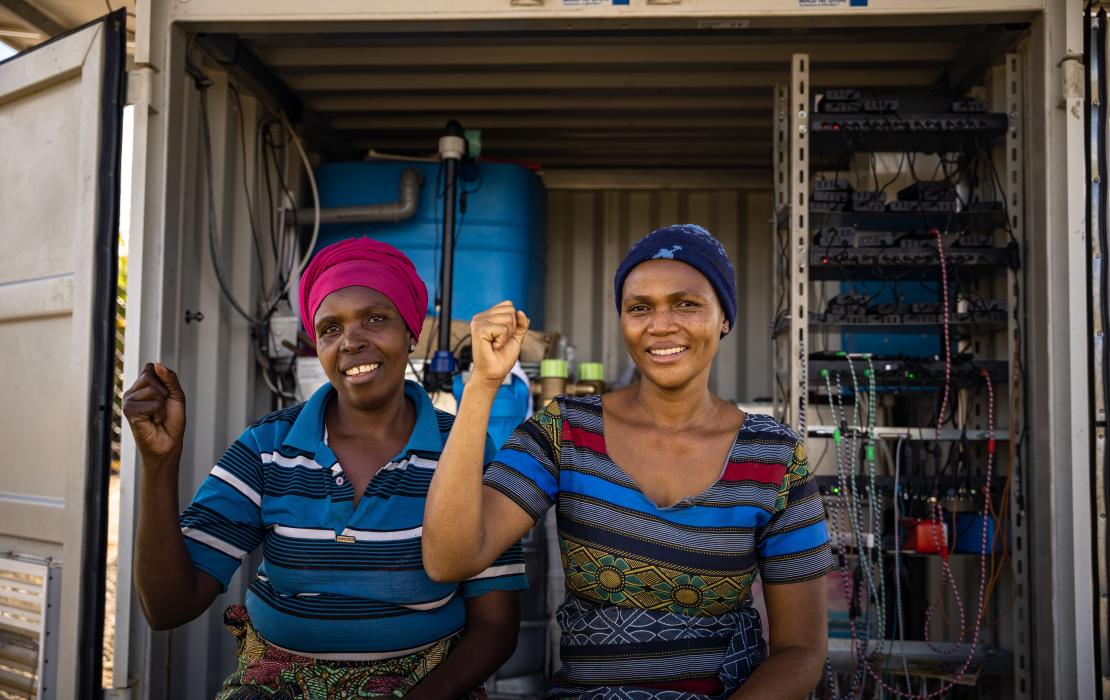
Small islands sit on the front line against climate change. They’re among the most vulnerable to rising sea levels, declining rainfall, and extreme…
Latest Publications
See allThis snapshot explores the NDC submissions, ambition, and progress made by Small Island Developing States.
