
Photo: UNDP India
Around the world, climate change is placing growing pressure on economies and public finances. Floods, droughts and storms are disrupting livelihoods, damaging infrastructure and stretching government budgets, often at the same time as countries are working to sustain development gains and protect vulnerable communities.
For many governments, the question is no longer whether adaptation is necessary, but how to finance it at the scale and speed required, particularly in the context of limited public resources and competing priorities. Translating national adaptation priorities into investment-ready pipelines that financiers can engage with remains a challenge.
In response, countries around the world are beginning to test new approaches. From innovative bonds and insurance mechanisms to reforms that help unlock private investment, a new generation of tools is emerging to help manage climate risk and turn long-term plans into action. Together, these efforts point to an evolution in how adaptation is being financed. Here are three key shifts.
1. Linking finance directly to climate performance
One of the most significant shifts in climate finance is the move toward instruments that reward countries for meeting their climate goals.
Uruguay has become a leading example of this approach. In 2022, the country issued a sovereign sustainability-linked bond that ties borrowing costs to performance on climate and environmental targets drawn directly from its Nationally Determined Contribution (NDC). Unlike traditional bonds, which finance specific projects, sustainability-linked bonds connect a country’s overall climate performance to the cost of capital. If targets are met or exceeded, borrowing costs fall. If they are missed, they rise.
Juan Labat, Environmental Economics Advisor to Uruguay’s Ministry of Economy and Finance, explains why this matters: “We put forward the idea that a country can be rewarded — through a step down in interest rates — when it meets its climate commitments. The goal is not to innovate for its own sake, but to use finance in a way that drives more climate action.”
Uruguay’s bond was among the first to include a “reward” mechanism, offering lower interest rates if the country exceeded its climate targets on emissions intensity and forest conservation. The design sent a clear signal to markets: ambition and performance matter. Crucially, the bond was grounded in national policy. Its key performance indicators were drawn directly from Uruguay’s NDC, ensuring alignment between climate planning and financial markets.
The approach has since attracted global attention, demonstrating how sovereign finance can be structured to support long-term resilience while maintaining fiscal discipline. At the same time, replicating this model is not straightforward; it depends on credible indicators, clear alignment with national adaptation priorities and sufficient confidence from investors. Many countries, however, still need support to meet these institutional and technical conditions.
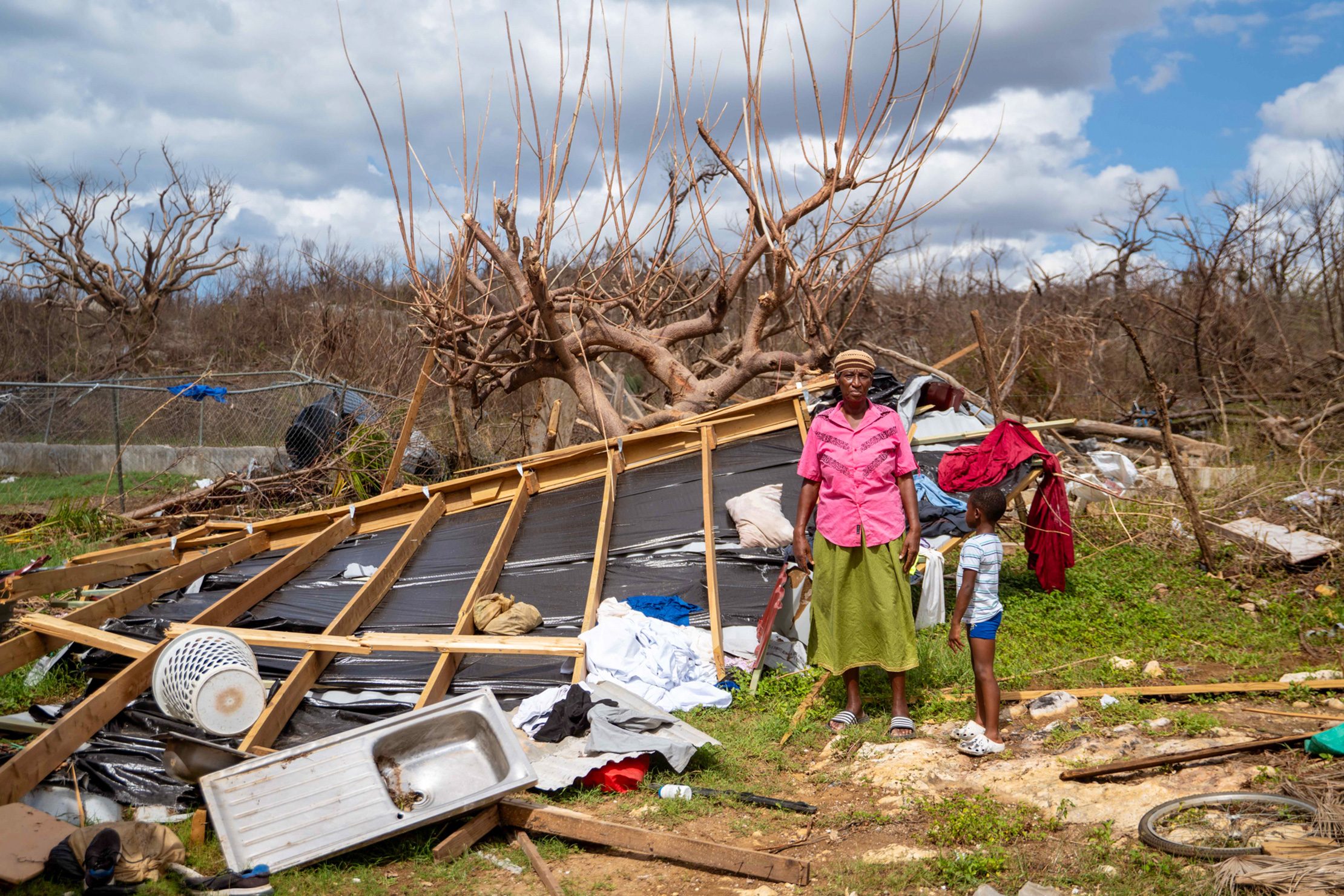
Damage from Hurricane Melissa, one of the most severe storms to hit Jamaica in recent years, is estimated at US$8–15 billion – nearly a quarter of the country’s GDP. Photo: UNDP Jamaica
2. Managing climate risk in advance
As climate impacts intensify, countries are increasingly recognising that responding after shocks occur is not enough. Financing needs to be in place before. This is where risk financing and insurance are playing a growing role.
In Jamaica, a layered disaster risk financing strategy helped the government respond quickly to Hurricane Melissa. With a catastrophe bond, sovereign risk financing and contingent credit lines in place, funds could be mobilized rapidly to support emergency response and early recovery, providing a vital lifeline in the days and weeks following the tropical cyclone. The approach reflects a broader shift in thinking: climate risk is not only an environmental issue, but a fiscal one. Without pre-arranged financing, the damages caused by climate change impacts can derail budgets, increase debt and slow recovery for years.
UNDP’s Insurance and Risk Finance Facility works with countries to develop similar systems, from sovereign risk financing to micro-insurance for households and farmers. In Indonesia, for instance, innovative insurance mechanisms are being explored to protect coral reefs and coastal ecosystems, with payouts triggered by environmental thresholds such as rising ocean temperatures. These tools are not designed to replace adaptation investments. Instead, they complement them, helping governments manage residual risk while investing in long-term resilience.
As climate shocks become more frequent, such approaches are increasingly seen as essential components of national adaptation strategies. However, establishing these systems requires advance planning, fiscal coordination across government and sustained engagement with capital markets and insurers.
3. Reforming systems to unlock larger flows of finance
Perhaps the most important shift taking place is institutional.
In many countries, the main barrier to climate finance is not a lack of ideas or ambition, but the absence of systems that allow finance to flow at scale. This includes public financial management rules, regulatory frameworks, and the capacity to assess and manage climate risk.
Rwanda offers a compelling example. Through its participation in the International Monetary Fund (IMF)’s Resilience and Sustainability Facility, the country has integrated climate considerations into budget planning, fiscal risk assessments and public investment decisions. The programme has helped strengthen macroeconomic resilience while supporting climate action.
The results have been tangible. Rwanda used RSF support to establish a national climate fund and crowd in additional finance from development partners. Reforms also strengthened how climate risks are assessed across government, from infrastructure planning to debt management.
As Rwanda’s experience shows, climate finance is not only about mobilizing resources but about creating the conditions that allow investment to happen. Similar reforms are underway elsewhere. In Ecuador, regulatory changes enabled the introduction of parametric insurance for farmers. In Uzbekistan, reforms to agricultural insurance frameworks have helped protect rural livelihoods. In many other countries, aligning policies, institutions and financial systems has proven essential for scaling adaptation.

The use of sustainability-linked bonds (SLBs) is growing as governments and investors look for ways to connect finance more directly to real-world climate action. Photo: UNDP Uruguay

In December 2022, Rwanda became the first African nation to access the IMF's Resilience and Sustainability Facility, securing $319 million to support climate-related reforms and enhance resilience. Photo: Alice Kayibanda/UNDP Rwanda
From innovation to impact
What unites these experiences is a shared understanding that climate resilience cannot be financed through a single instrument or funding source.
Instead, countries are beginning to combine different approaches in more strategic ways: aligning finance with climate outcomes, strengthening systems that manage risk and putting in place the policies and institutions needed to attract sustained investment. Together, these efforts are helping translate climate ambition into action while reducing the economic disruption caused by climate shocks.
Initiatives such as the Adaptation Accelerator Hub are supporting this momentum by helping countries strengthen investment planning and connect national priorities with partners and sources of finance that can help turn plans into action. The aim is not to create new systems, but to build on what already exists and scale what works.
As climate impacts intensify, the challenge ahead is clear: moving faster, working across sectors and ensuring that finance reaches the places where it can make the greatest difference. The examples from Uruguay, Rwanda, Jamaica and beyond show that the tools already exist. What matters now is using them at scale.
*
Led by the Government of Italy, with UNDP as the partner agency, the Adaptation Accelerator Hub (AAH) supports developing countries – particularly those most vulnerable to climate change – to accelerate climate adaptation, helping translate national priorities into bankable, finance-ready initiatives that can drive systemic, long-term resilience.
The country experiences shared in this blog were presented in the Innovative Financing for Climate Adaptation: Unlocking Scalable Solutions webinar, held under the auspices of the AAH on 30 October 2025.
Explore More Stories