
Photo: UNDP Nepal

In Haiti, the strengthening of local technical capacity is helping communities manage water resources, monitor climate risks and build long-term resilience to increasingly variable rainfall. Photo: UNDP Haiti
Strengthening coordination for long-term resilience
For governments to be able to respond to climate change impacts effectively, coordination between different departments — from agriculture and infrastructure to health and emergency response — is essential. Yet institutions often tend to work in a compartmentalized way, making coordination difficult and putting adaptation efforts at risk.
In Lao PDR, an initiative funded by the LDCF helped strengthen coordination between government agencies and stakeholders in the Savannakhet Province within the Xe Bang Hieng river basin. As a result, authorities at national, provincial and district levels have worked together to develop integrated flood management strategies. A participatory process engaging nearly 400 stakeholders across five districts helped build shared approaches linking land use, ecosystem-based adaptation, water resource management and flood risk reduction. These strategies have now been formally endorsed by district governors and integrated directly into local development plans, providing a comprehensive framework to reduce vulnerability while supporting sustainable, long-term investment in climate resilience.
In Burkina Faso, strengthening coordination between public institutions, insurers and farmers is proving essential to scaling climate risk insurance. An LDCF-funded project focused on promoting index-based weather insurance (IBWI) for smallholder farmers is helping enhance coordination through joint planning, trainings and partnerships. Moreover, by actively engaging in policy dialogues and developing recommendations, the project is helping the government create a sustainable, nationwide framework that accelerates the institutional integration of IBWI. This matters because climate insurance only works at scale when institutions, financial systems and communities can work together effectively.

An LDCF-funded initiative in Lao PDR is supporting coordinated action on flood risk reduction, water management and climate resilience. Photo: UNDP Lao PDR
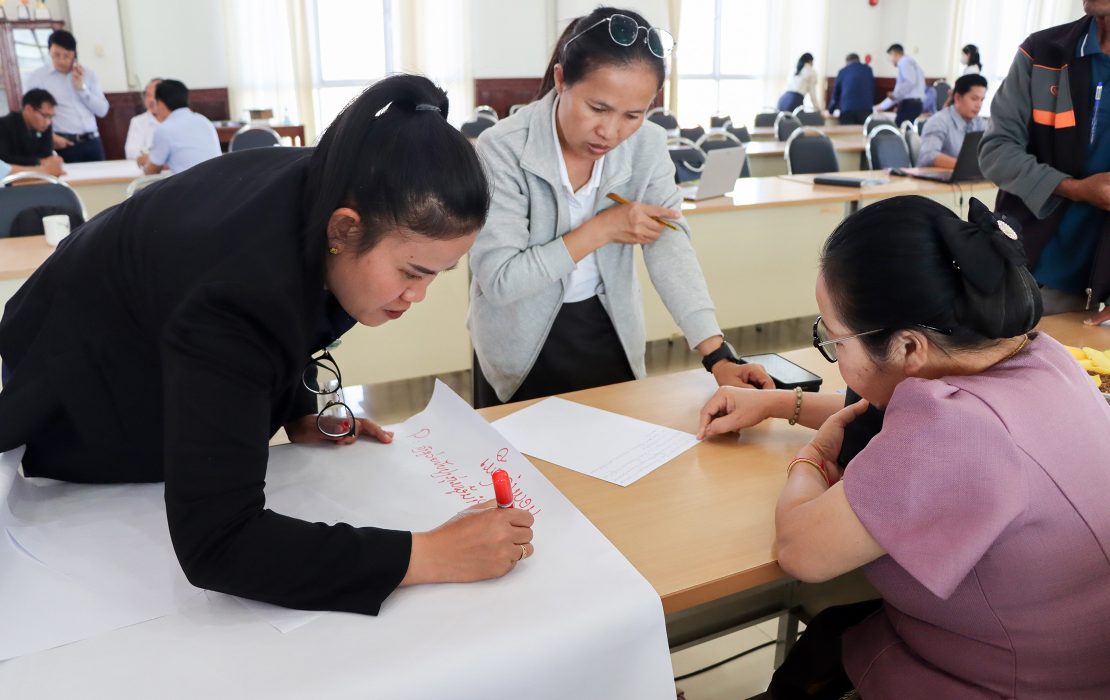
Through an inclusive consultation process, stakeholders in Lao PDR helped shape integrated strategies to reduce flood risks and strengthen long-term climate resilience. Photo: UNDP Lao PDR
Building technical skills for long-term adaptation
Climate adaptation increasingly depends on specialized knowledge — from climate modelling and flood mapping to water management and data analysis — as well as local knowledge, developed over generations. But in many vulnerable countries, these insights are not always incorporated in adaptation efforts as local agencies are under-resourced and technical expertise can be difficult to retain.
Without trained staff and strong technical systems, adaptation efforts can become fragmented or overly dependent on external consultants. Building local expertise helps countries manage climate risks more independently and respond as conditions evolve.
In Ethiopia, capacity development has been central to scaling climate adaptation, from national strategies down to local action. Under an LDCF-funded project, more than 10,000 people, including local government officials and agricultural extension workers, were trained in climate-resilient planning and the use of Geographic Information Systems (GIS) for participatory mapping. By partnering with academic institutions like Haramaya University and the Ethiopian Civil Service University, and deploying dedicated coordinators across multiple districts, the project has woven technical capacity directly into local government systems. As a result, woreda (district) officials are no longer relying on outside consultants. Instead, they are directly using climate data and mapping tools to identify vulnerable areas, guide long-term land-use decisions, and actively protect communities before climate shocks hit.
Meanwhile, in Haiti, under an LDCF-funded project, staff from the national water agency (DINEPA), the Ministry of Environment, and local partner institutions have received specialized training in hydrological inventorying, watershed mapping and climate-informed planning across several municipalities. These investments are empowering local technicians to directly manage and maintain drinking water supply systems, allowing them to monitor watersheds in real-time and adapt to increasingly erratic rainfall patterns.

In addition to training government staff in climate-resilient planning, an LDCF-funded project in Ethiopia has built the skills and capacity of women, youth and other vulnerable groups to develop climate-resilient livelihoods. Photo: Yohannes Admasu / UNDP Ethiopia
Supporting communities to lead and sustain adaptation
Adaptation efforts rarely last if communities are not involved in designing and maintaining them. Interventions are far more durable when local people help shape decisions, manage resources and lead implementation themselves. Moreover, community ownership strengthens trust and supports collective action, which is often essential when managing shared resources such as forests and water systems.
In Mali, community participation is emerging as a vital approach to natural resource management, despite a highly complex and challenging security environment. In this context, an LDCF-funded project has helped to gradually revitalize village and municipal natural resource management committees. While still at an early stage of development, these committees are stepping up to help monitor shared environmental resources, mediate local conflicts and apply climate-resilient practices. Encouragingly, women’s involvement in these structures is bringing their voices into local governance as well. These early steps are laying the groundwork for stronger environmental governance and building the collective capacity needed to navigate both climate pressures and community tensions over time.
In Nepal, community-led planning has strengthened resilience across the entire Lower Dudhkoshi Watershed, a rugged, landslide-prone region where climate change threatens critical water sources for over 125,000 people. Working across eight local governments (palika), an LDCF-funded initiative helped integrate climate resilience directly into local community forest and water user groups responsible for managing forests, restoring degraded watershed ecosystems and protecting local water sources. An inclusive approach was used to ensure that women and marginalized groups were involved in decision-making. As a result, women hold 40 percent of executive roles on local user committees, while targeted initiatives have actively empowered highly vulnerable groups, such as the indigenous Majhi community, to lead the management of their own local natural resources. This effort has ensured that watershed conservation is deeply tied to securing local livelihoods and enhancing climate resilience.
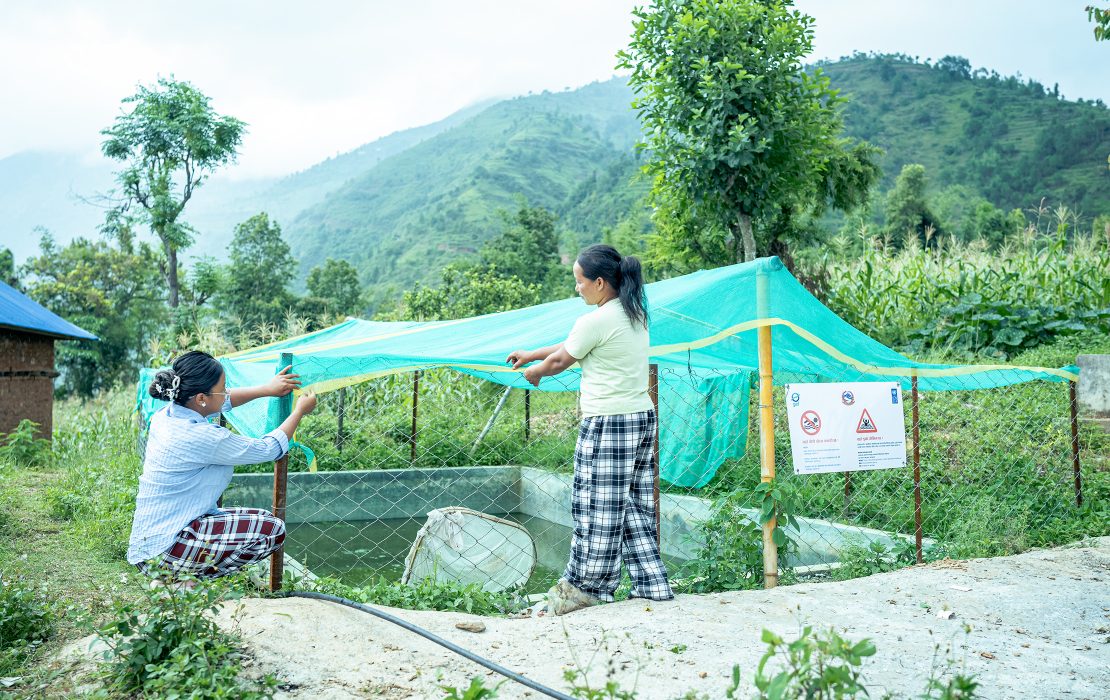
An LDCF-funded initiative in Nepal has strengthened the capacity of local institutions and communities to manage forests, restore watershed ecosystems and protect critical water sources. Photo: Robic Upadhyay / UNDP Nepal
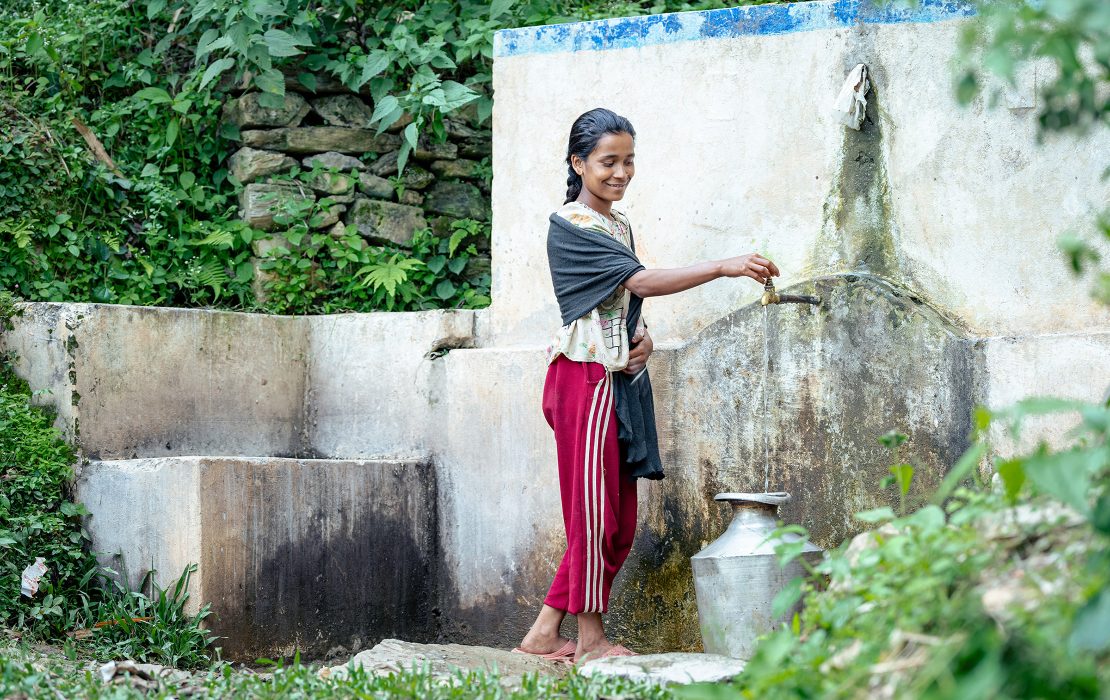
An LDCF-funded initiative in Nepal has strengthened the capacity of local institutions and communities to manage forests, restore watershed ecosystems and protect critical water sources. Photo: Robic Upadhyay / UNDP Nepal
Building resilience that lasts
Climate adaptation is often measured in infrastructure built or projects delivered. But the true test is whether countries and communities are equipped to respond to climate risks long-term, especially as conditions change. This requires institutions that can coordinate, technical experts who can apply climate knowledge in practice, and communities with the power and confidence to shape their own futures.
The examples from Lao PDR, Burkina Faso, Ethiopia, Haiti, Mali and Nepal are among many that show that capacity building is not a side issue in climate adaptation. It is one of the foundations that allows resilience efforts to endure and expand over time. As climate impacts intensify, investing in these human and institutional foundations may prove just as important as investing in physical infrastructure itself.
*
Since 2001, the Least Developed Countries Fund (LDCF), managed by the Global Environment Facility (GEF), has played a vital role in supporting climate-vulnerable countries to build resilience and adapt to the impacts of climate change. As the only climate adaptation fund dedicated exclusively to LDCs, the LDCF addresses urgent and immediate adaptation needs by supporting countries to implement priorities identified in their National Adaptation Programmes of Action (NAPAs), National Adaptation Plans (NAPs), Nationally Determined Contributions (NDCs) and related national strategies.
UNDP, as one of the GEF's founding Implementing Agencies, has partnered with the LDCF for over two decades to deliver more than 120 targeted adaptation projects in over 45 countries. This enduring collaboration has mobilized US$465 million in LDCF grant funding and upwards of $2 billion in co-financing. Today, the active portfolio continues to drive progress on the ground, supporting more than 35 ongoing projects across 30 nations, including five Small Island Developing States.
Explore More Stories