

Photo: UNDP Cambodia
In Ukraine, Chernozem, the world’s most fertile black soil, is increasingly partitioned off by warning markers cautioning against unexploded ordnance from the ongoing war. As Ukrainian deminer Oleksandr Tarasovsky observes, “Land is perhaps the greatest resource for the country’s future, but now it’s full of mines.”
Thousands of miles away, in Lao PDR, a similar lethal geography persists, the enduring sediment of conflicts fought decades ago. Further east, in the Solomon Islands, the legacy of the World War II goes deep into the ocean and the land.
These different crises have one common thread: the unwanted environmental legacies of war.
Explosive remnants of war are a safety, development and climate threat
Unexploded ordnance (UXO) and abandoned explosive ordnance (AXO) are explosive remnants of war (ERWs). They are munitions that were fired but failed to detonate or were left behind during the war. Together with landmines – which are typically pressure-sensitive traps designed to be triggered by footsteps or vehicles – explosive ordnance remain "live" and highly volatile.
Their danger does not dissipate with time. Instead, decades of exposure to environmental conditions can make them more prone to accidental detonation. They turn productive ecosystems into "no-go zones," where a single step or a farmer's plough can trigger a lethal explosion.
An estimated 100 million people in over 60 countries and territories live under the threat of landmines and ERWs. In 2024, at least 6,279 people were killed or injured by landmines and ERWs, 86 percent of them civilians.
In a world increasingly shaped by climate change, the environmental legacies of conflict are becoming even more dangerous. This makes mine action an important part of the climate, peace and security agenda.
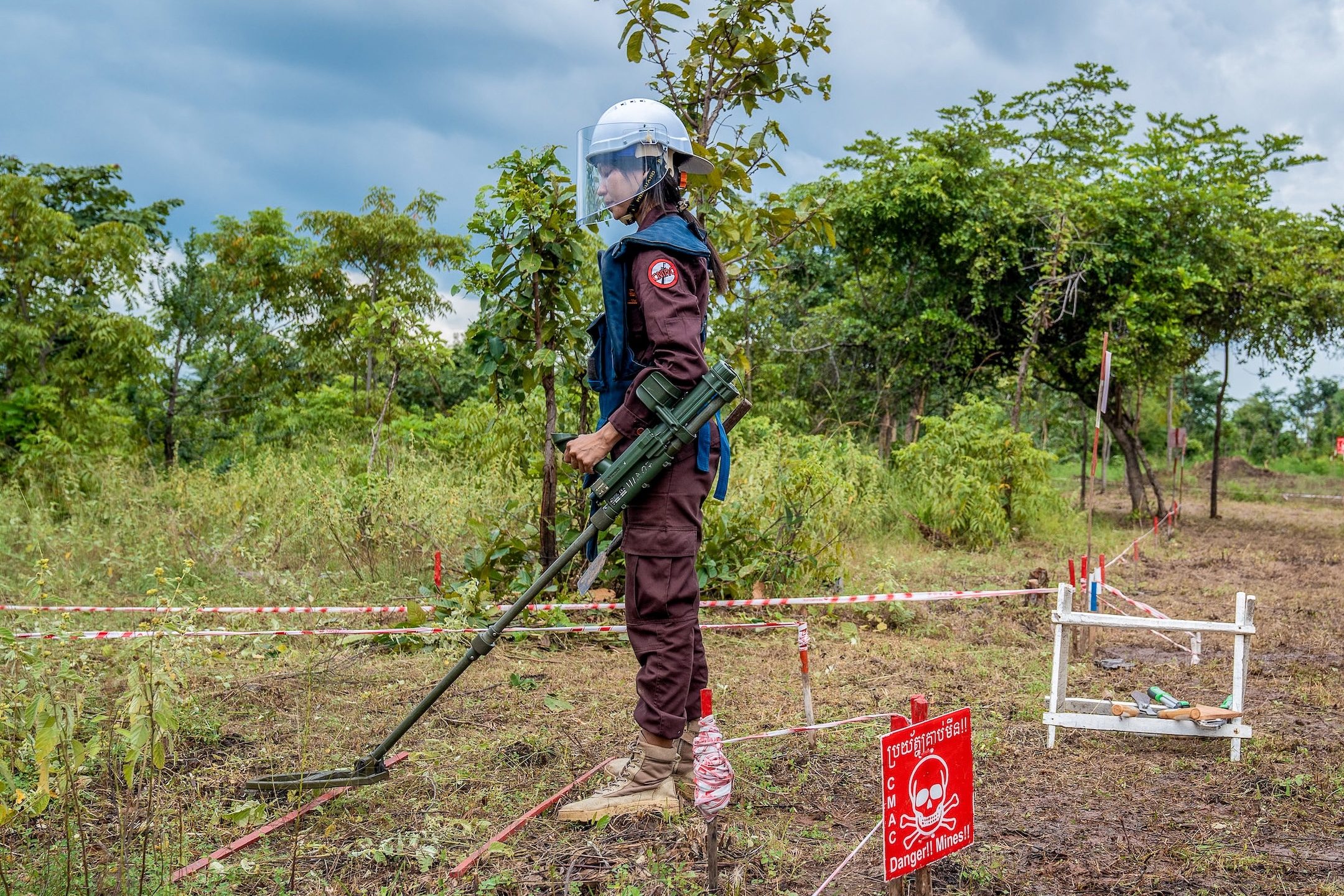
In Cambodia, initiatives supporting mine action for human development have cleared 418 km² of contaminated land since 2006. Photo: Manuth Buth / UNDP Cambodia
Mine action is central to climate, peace and security work
Threats from landmines, ERWs and climate change often reinforce one another. Floods can move mines from their original locations, landslides can expose long-buried ordnance, and coastal erosion or storms can shift submerged munitions across coastlines, creating new risks and blocking community attempts at climate adaptation.
Unexploded ordnance can also degrade ecosystems. Contaminated farmland cannot be safely cultivated, forests and wetlands cannot be restored, and coral reefs are damaged by harmful chemicals from UXO as they break down.
These risks are further compounded by rising climate-related displacement. As of June 2025, 117.3 million people were forcibly displaced globally, with climate hazards increasingly intersecting with conflict.
In Africa’s Sahel region, where communities are affected by both insecurity and environmental degradation, climate-induced displacement is increasing exposure to explosive hazards. At the same time, flooding and shifting landscapes can move or expose UXO, making contamination less predictable and further complicating recovery efforts.
Mine clearance plays a vital role in strengthening climate adaptation. Returning land to safe and productive use allows farmers to revive agricultural production, communities to rehabilitate degraded environments, and governments to invest in climate-resilient infrastructure.
Take the case of Ukraine, where around 630 km² of farmland was returned to productive use in 2025 alone. This has improved food security for Ukrainians as well as for countries in the Middle East and Africa who import its agricultural produce.
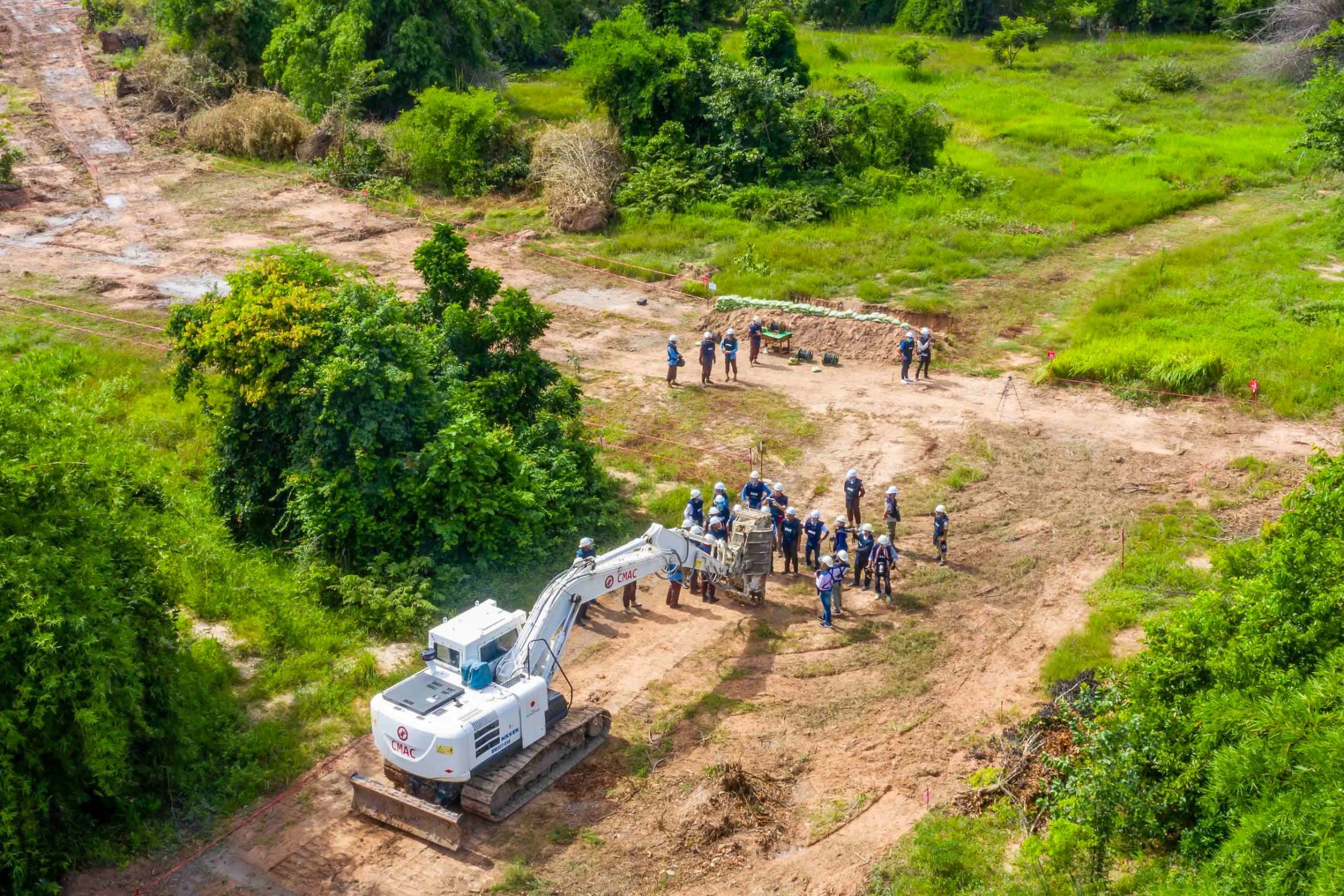
In Cambodia, initiatives supporting mine action for human development have cleared 418 km² of contaminated land since 2006, benefiting over 1.37 million people. Meanwhile, in Viet Nam, large-scale clearance efforts have released around 500,000 hectares of land in between 2014 and 2023, allowing people to construct climate-resilient houses and plant crops that can withstand storms and floods.
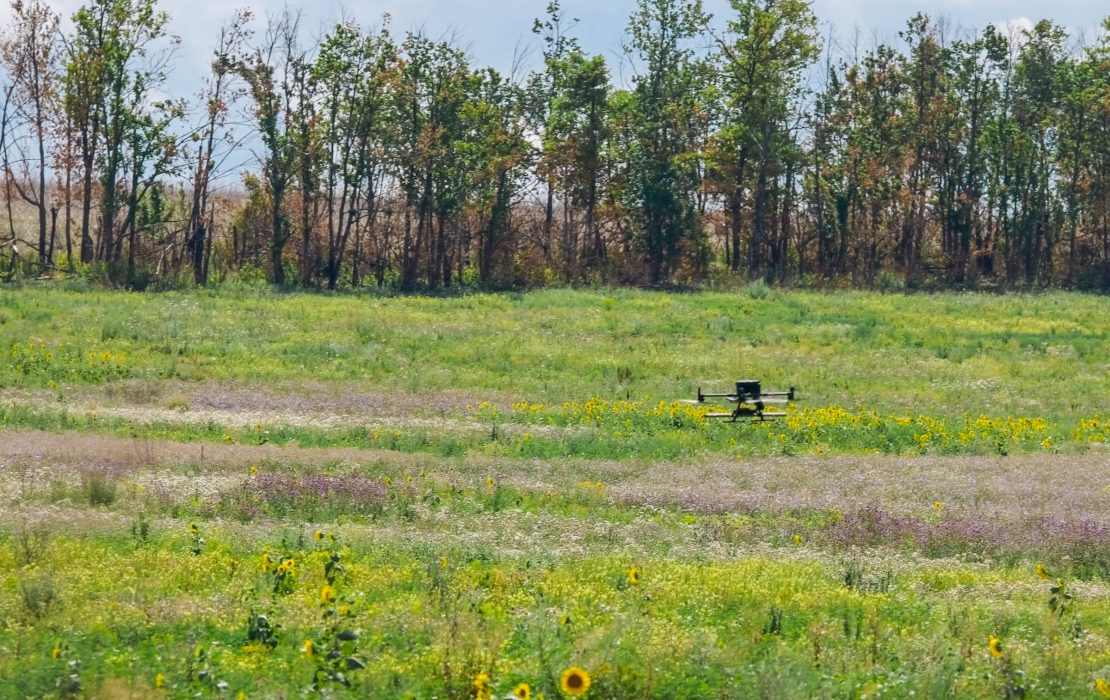
Ukraine is deploying unmanned aerial vehicles to survey farms in search of unexploded ordnance. Photo: UNDP Ukraine

Around 630 km² of farmland was returned to productive use in 2025, improving food security in Ukraine and countries relying on its exports. Photo: UNDP Ukraine
By restoring access to land and livelihoods, demining also mitigates conflicts that can arise due to competition over scarce resources. Beyond peacebuilding, mine action is an enabler and critical driver of development and resilient livelihoods. The release of cleared land allows households to resume agriculture, diversify income sources, and invest in climate-smart practices that strengthen their ability to withstand shocks such as droughts and floods.
This dynamic is visible in Zimbabwe, where landmines along the Mozambique border have long restricted access to farmland and grazing areas. As clearance efforts enable communities to safely return, reduced competition over land and water is rebuilding trust between communities.
Clearing ordnance also makes it possible to install early warning systems, monitoring equipment and other disaster risk reduction measures. For example, in the Solomon Islands, decontaminated land is being prepared to host weather stations for collecting atmospheric data.
Mine action also supports climate mitigation by restoring ecosystems that sequester carbon. Once mines are cleared, forests, wetlands and seabed can be rehabilitated as natural carbon sinks while also providing protection against hazards such as flooding and land degradation.
Integrating mine action into climate policy is a necessity
Recognizing these interlinkages and scaling up action on addressing the dangers they pose requires closer alignment between mine action and climate policy. In most cases, mine-affected landscapes overlap with areas prioritized for agriculture, forest restoration and disaster risk reduction. This makes mine action a prerequisite for addressing climate and development priorities.
By integrating mine action into climate and disaster risk reduction policies, we can ensure that contaminated land is identified and cleared on higher priority as part of broader climate resilience planning.
Environmental screening can also be better integrated across clearance operations. Emerging approaches like the Green Field Tool embed ecological analyses into clearance planning by identifying sensitive habitats and prioritizing land release in ways that support ecosystem restoration. Mine action programmes can also be linked with climate finance and nature-based solutions, as they unlock opportunities for climate action.
Recognizing mine action as an enabler of climate adaptation and mitigation can help unlock more integrated, effective responses. In doing so, it can transform contaminated land from a source of risk into a foundation for climate resilience and lasting peace.
Explore More Stories