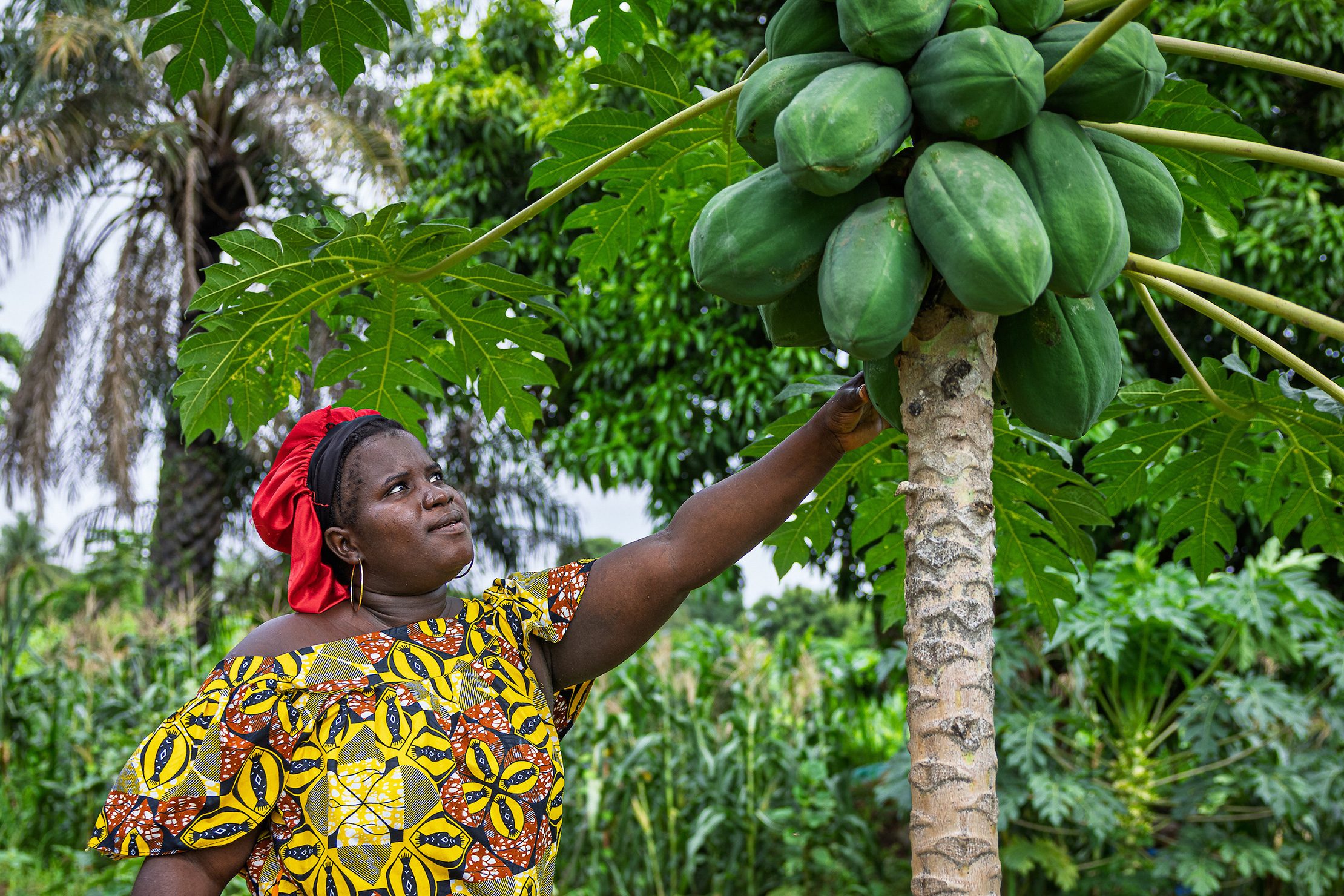
Photo: Gregorio Cunha/UNDP Guinea-Bissau
3 June 2026 — The Least Developed Countries Fund (LDCF), managed by the Global Environment Facility, has approved US$20 million in financing for two new UNDP-supported climate adaptation initiatives in Senegal and Guinea-Bissau. The projects will help communities manage growing risks from flooding, coastal erosion and sea-level rise while protecting ecosystems and livelihoods. Together, they are expected to directly benefit nearly 483,000 people in coastal, urban and peri-urban areas.
While tailored to different national contexts, both projects combine ecosystem restoration, climate-informed planning and resilient infrastructure to reduce vulnerability to climate change impacts.
In Senegal, the project will support climate adaptation efforts in the Niayes and urban and peri-urban areas of Dakar, where recurrent flooding has intensified in recent decades due to climate change, rapid urbanization and ecosystem degradation. The initiative will restore wetlands and retention basins that absorb and regulate floodwaters, while promoting sustainable agriculture and green entrepreneurship. Nature-based solutions will also be integrated into local planning frameworks to support long-term sustainable flood management. The project will also strengthen livelihoods and improve water management for communities that depend on agriculture and wetlands. More than 362,000 people are expected to directly benefit.
In Guinea-Bissau, the project will strengthen resilience in low-lying coastal and urban areas. Activities will focus on Bissau, the island of Bubaque and the coastal area of Varela. The initiative will support climate-resilient planning and restore mangroves while strengthening community disaster preparedness. It will also help climate-proof public infrastructure such as health centres, schools and sanitation facilities, alongside stronger early warning systems and coordination for integrated coastal zone management. Around 120,000 people are expected to directly benefit.
“Climate resilience, healthy ecosystems, and sustainable development are deeply interconnected. With support from the GEF, UNDP looks forward to working alongside Senegal and Guinea-Bissau to strengthen resilience and reduce vulnerability to climate impacts,” said Marcos Neto, UN Assistant Secretary-General and Director of UNDP’s Bureau for Policy and Programme Support.
Both projects place strong emphasis on local engagement, including the participation of women. They also focus on strengthening institutions and knowledge-sharing to support more effective adaptation over time.
The approvals highlight the growing need to invest in adaptation solutions that protect ecosystems and help communities prepare for complex climate risks.
Through the LDCF, the GEF supports Least Developed Countries to address urgent adaptation needs and build long-term resilience to climate change. UNDP is one of the GEF’s largest implementing partners for adaptation worldwide.
*
About UNDP
UNDP is the leading United Nations organization fighting to end the injustice of poverty, inequality, and climate change. Working with our broad network of experts and partners in 170 countries, we help nations to build integrated, lasting solutions for people and planet.
Learn more at undp.org or follow at @UNDP.
About the Global Environment Facility
The Global Environment Facility (GEF) includes several multilateral funds working together to address the planet's most pressing challenges in an integrated way. Its financing helps developing countries address complex challenges and work towards meeting international environmental goals. Over the past three decades, the GEF has provided more than $26 billion in financing, primarily as grants, and mobilized another $148 billion for country-driven priority projects.