Summary
- The concept of just transition refers to integrating social justice and equity principles, processes and practices in climate action.
- Just transition must be defined locally, according to each country’s priorities, economic structure and social context.
- Integrating just transition in climate policies and climate action requires a whole-of-society approach which brings all key actors and stakeholders together.
- A just transition can help create new green jobs, drive local solutions, advance sustainable development and build public support for climate action.
- Countries can face obstacles in their efforts to achieve a just transition from a lack of clarity and consensus on what it entails to gaps in data and insufficient funding.
What is a just transition?
The concept of just transition refers to integrating social justice and equity principles, processes and practices in climate action. Broadly speaking, a just transition can take place when countries shift to low-carbon and climate-resilient development pathways in a way that is equitable, socially inclusive and economically viable, ensuring that the benefits of the transition are shared widely while minimizing negative impacts on workers, communities and vulnerable groups.
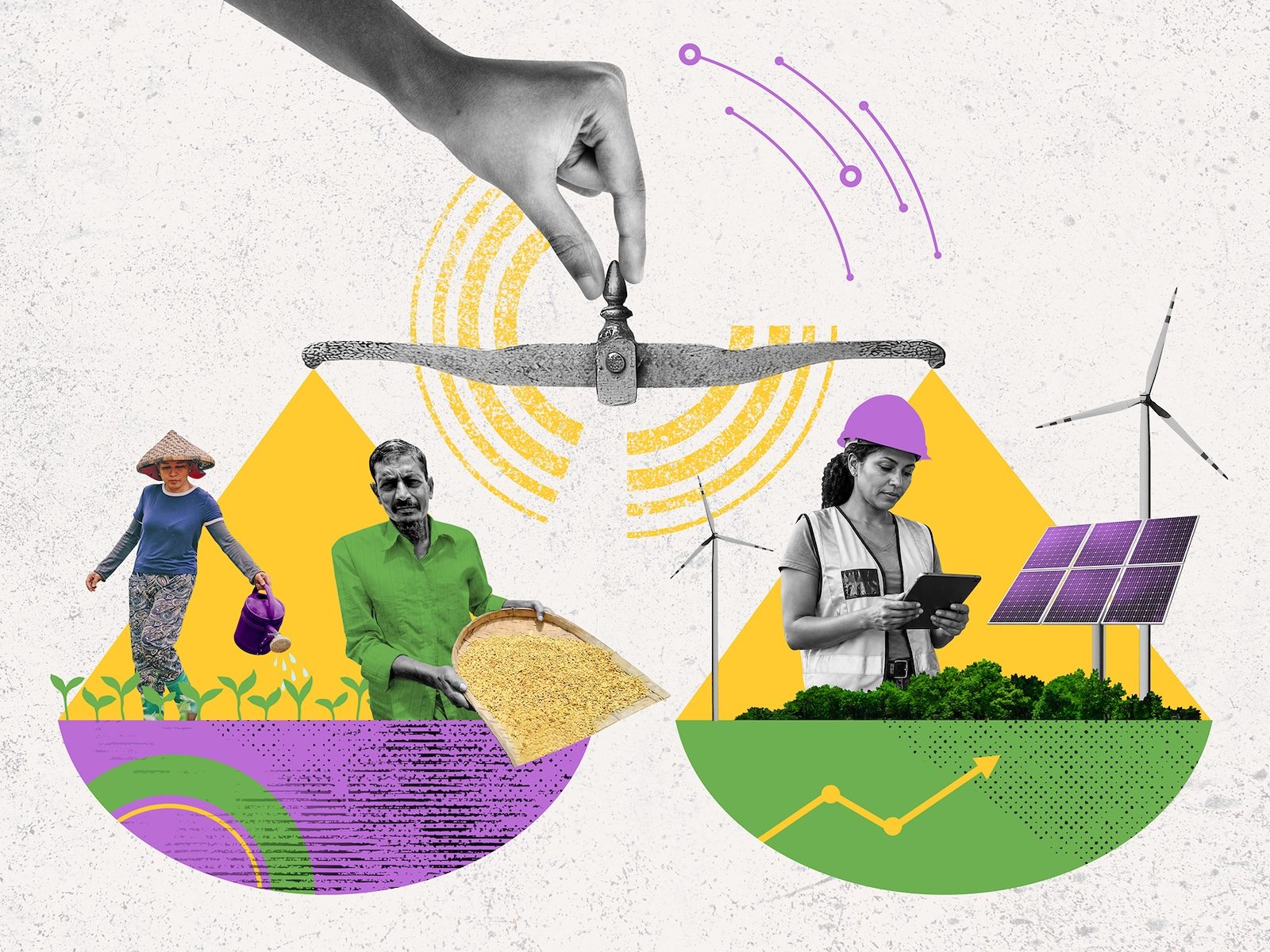
However, a just transition must be defined locally, according to each country’s priorities, economic structure and social context. What fairness in the transition means can therefore differ widely based on location. In some countries, it can mean supporting coal workers transition to new sectors and keeping the price of electricity stable to protect vulnerable groups. In others, it can mean protecting rural livelihoods while reducing deforestation or ensuring that new jobs in green sectors are available to both women and men.
Furthermore, just transition considerations cannot be separated from broader issues around global climate justice and the principle of common but differentiated responsibilities included in the Paris Agreement.
Why is the concept of just transition important?
The climate crisis is the greatest challenge humanity has ever faced. Countries need to urgently take bold, large-scale action to avoid the worst of its consequences. But there are profound social implications in how governments choose to cut greenhouse gas emissions, from impacts on livelihoods, jobs, education and health to concerns about social justice, human rights and gender equality.
While the Paris Agreement sets a clear direction of action, it is up to individual countries to decide which transition pathways they will take. If not managed well, the socio-economic transformation pursued through climate action runs the risk of further increasing social inequality and exclusion and making businesses and markets less competitive, while eroding public support for climate ambition. By strengthening transition pathways that reinforce equity and inclusivity and leave no one behind, countries can minimize these challenges in pursuit of a low-carbon future.
Developing countries face specific transition challenges, including fiscal constraints, high poverty rates, weak social safety nets, energy access gaps and greater vulnerability to climate change impacts. While developed countries can subsidize green technologies and industries, developing countries with reduced access to capital risk being shut out of emerging low-carbon value chains. This leaves the populations and economies of developing countries more vulnerable to potential negative consequences resulting from the global shift to low-carbon development.
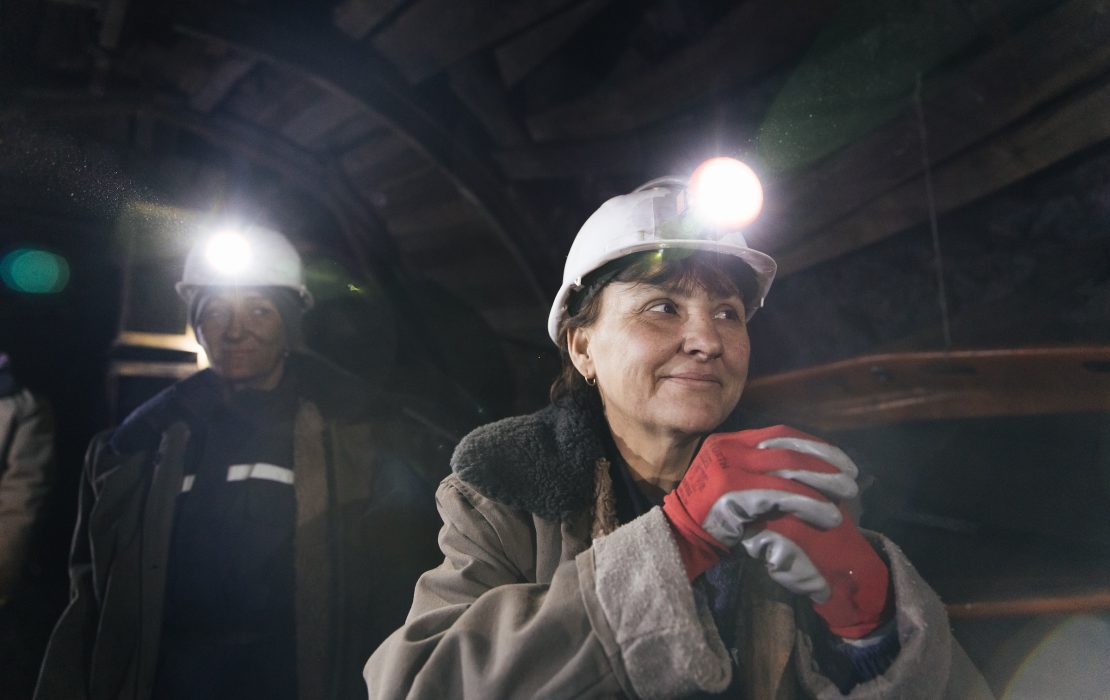
Women miners in Serbia are making the transition to new green jobs. Photo: UNDP Serbia
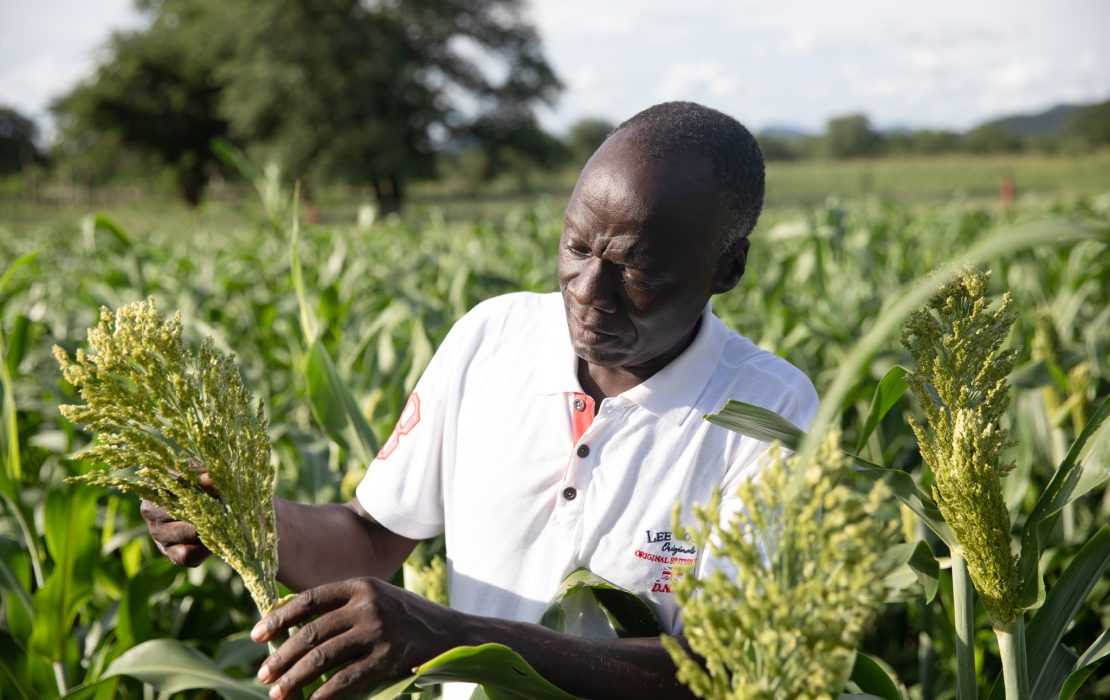
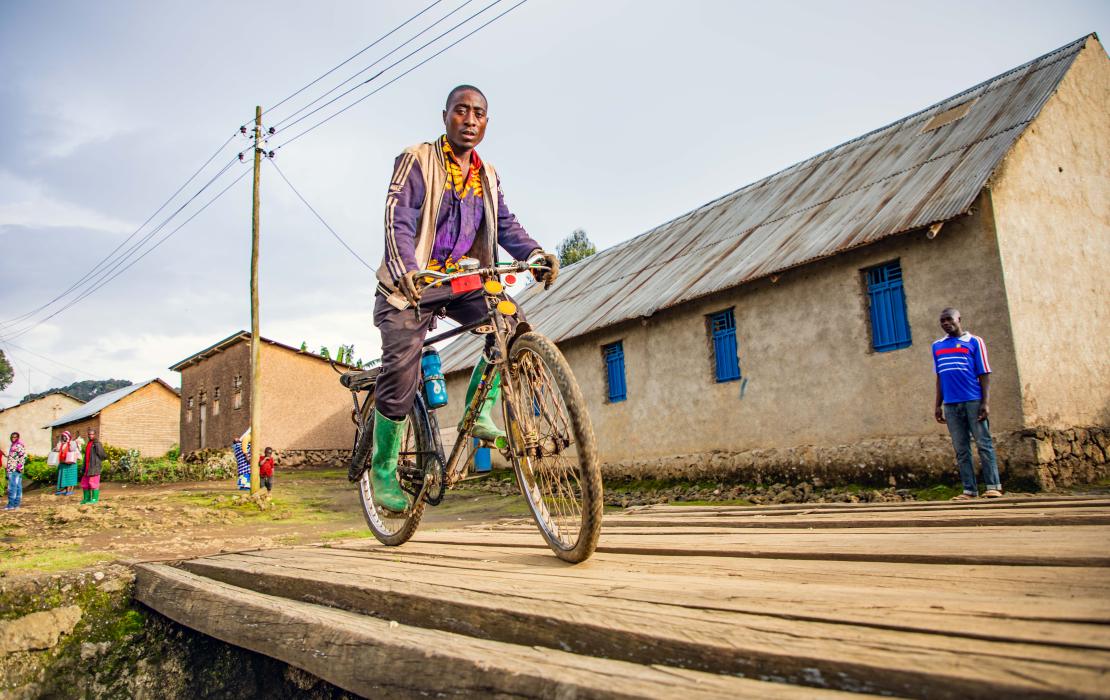
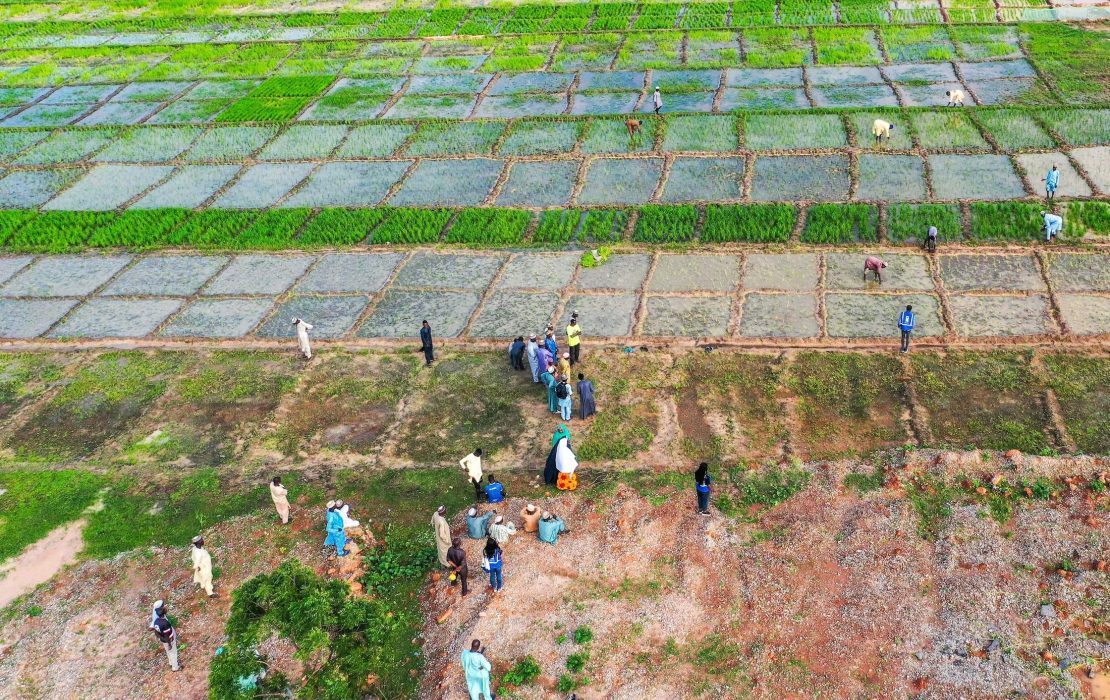
Climate change is forcing smallholder farmers in Zimbabwe to seek new solutions. Photo: Pylaia Chembe / UNDP Zimbabwe
What are the benefits of a just transition?
As countries worldwide continue to update and implement their national climate plans (NDCs) and long-term strategies (LT-LEDS), embedding the principles, processes and practices of just transition in their climate action can have multiple benefits:
- A just transition helps bring the public along. If governments can demonstrate the socio-economic benefits afforded by a low-carbon transition, they can build a broad base of public support for higher climate ambition as citizens will be more likely to get behind the associated policies and investments.
- A just transition can create new green jobs with guaranteed living wages, proper workplace safety protections and health benefits. These quality jobs will lift people, their families and their communities up. They will also help attract the workers needed for the necessary economic transformation.
- A just transition lays the social groundwork for a resilient net-zero economy. With transparent planning and the active participation of a broad range of stakeholders, governments can minimize opposition that can derail the move away from fossil fuels and other harmful activities such as deforestation and wasteful production practices.
- A just transition can drive local solutions. By undergoing the consultative processes associated with achieving just transition, countries can better understand the positive and negative impacts of climate action and then identify the best solutions for their context.
- A just transition reinforces the urgency for concerted efforts to combat climate change. Transitions are often disruptive and deliberate effort is needed to make them manageable. A just transition strategy will help leaders stay focused on the urgent task of rapid decarbonization, while also striving for fair and inclusive outcomes.
- A just transition helps advance progress on all the Sustainable Development Goals (SDGs), particularly those related to gender equality, affordable and clean energy, decent work and economic growth, reduced inequalities, and responsible production and consumption.
Who’s involved in making a just transition happen?
Integrating just transition in climate policies and climate action requires a whole-of-society approach which brings all key actors and stakeholders together to articulate a joint vision for the low-carbon transition. Making the transition fair and inclusive is in everyone’s interest because it strengthens social acceptance, protects livelihoods, and makes climate action more sustainable and politically feasible.
As convenors of social dialogue and consultation processes, governments have the primary responsibility to put in place the policy and regulatory frameworks needed to accelerate climate action underpinned by a just transition. Governments are also critical investors – owners of state enterprises and infrastructure – and employers of public sector workers, who have essential roles to play in enabling a just transition.
Meanwhile, businesses play a critical role in identifying risks and tapping into opportunities, helping create and grow new markets and value chains. They are also key to ensuring labour rights and human rights are respected and helping workers gain new green skills.
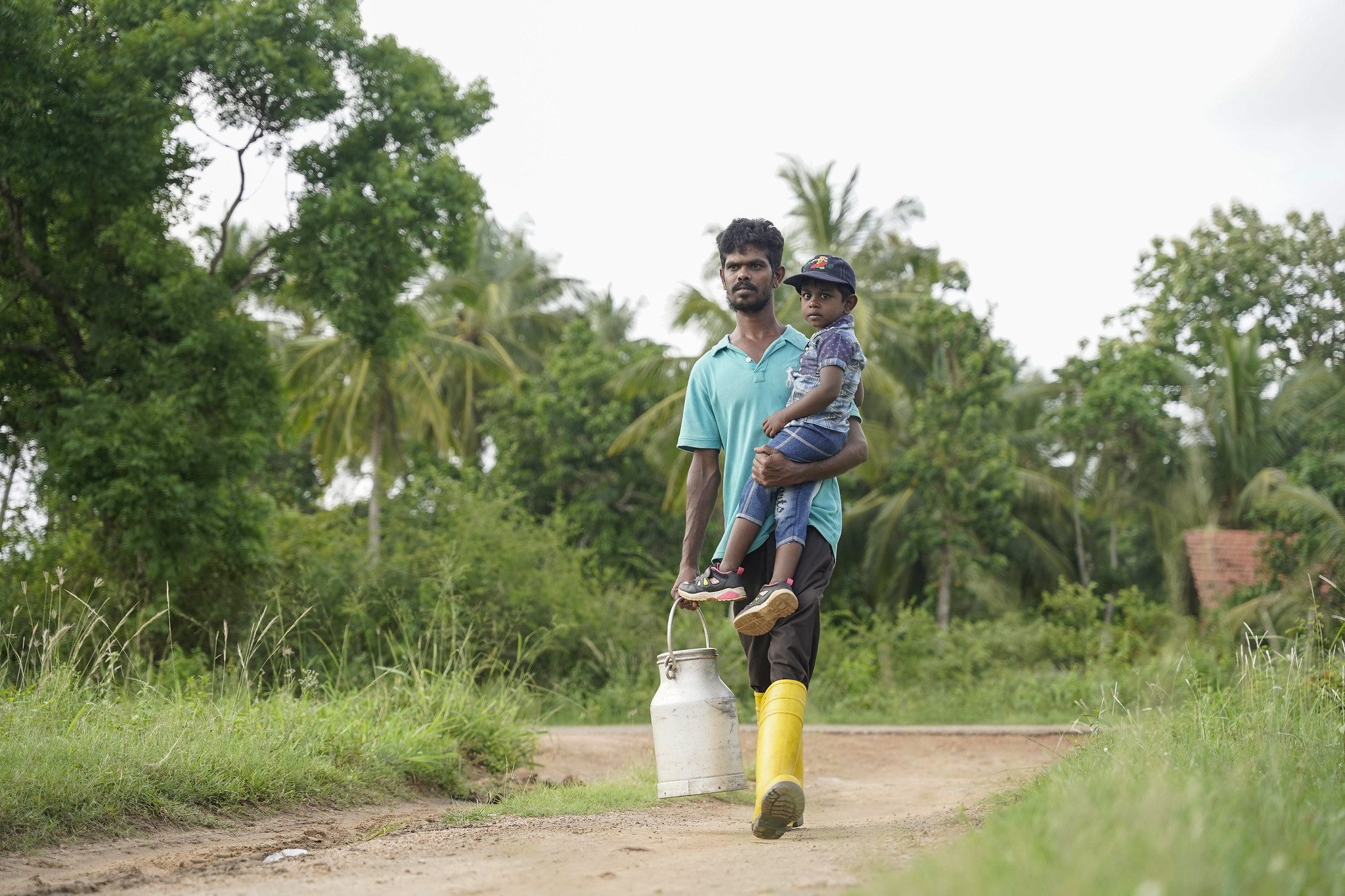
Developing countries face specific transition challenges, including fiscal constraints, high poverty rates, weak social safety nets, energy access gaps and greater vulnerability to climate change impacts. Photo: UNDP Sri Lanka
Trade unions are pivotal to achieving a just transition, ensuring the needs of workers are represented when transition plans are being shaped. They also play a role in making sure that green jobs are good jobs with fair wages, benefits and safe working conditions.
Universities and vocational schools produce the knowledge and shape the workforce needed for a just transition to happen, having a direct hand in how quickly countries can achieve their climate goals. With children and young people under 30 making up half the world’s population, they need relevant skills that allow them to participate and thrive in a low-carbon economy.
The international community is a key stakeholder in driving a global just transition. Through a process guided by the United Nations Framework Convention on Climate Change (UNFCCC), the international community has increasingly institutionalized just transition as a core component of global climate governance. In recent years, the process has advanced from broad political recognition to concrete commitments. At COP28, just transition was formally embedded in the climate negotiations process through the operationalization of the Just Transition Work Programme. Then, at COP30, a dedicated Just Transition Mechanism was established to support cooperation, technical assistance and capacity-building for country-led transition pathways, signalling that just transition is a key enabler of effective climate action.
What are the obstacles to achieving a just transition?
Countries can face a number of obstacles in their efforts to achieve a just transition.
Often, there is often a lack of clarity and consensus on what a just transition entails in practice. While the concept is widely endorsed, its interpretation varies across countries depending on economic structures, labour markets and development priorities. This can lead to fragmented approaches, where just transition is treated as a high-level principle rather than translated into concrete policies, targets and implementation frameworks.
There are also significant gaps in data, evidence and national capacities. Many countries lack robust data on the socio-economic benefits of climate action, as well as the analytical tools needed to assess how different policies affect jobs, incomes and vulnerable groups. At the same time, limited technical and institutional capacities constrain both policy design and implementation. This includes the ability to conduct impact assessments and modelling, coordinate across sectors, and align education and training systems with emerging green labour market needs. Together, these gaps make it difficult to prioritize interventions, design targeted support measures and ensure effective delivery.
Inadequate and misaligned investment is another critical barrier. Just transition measures, such as reskilling programmes, social protection mechanisms and regional economic diversification processes, require sustained public investment, yet these areas are often underfunded. At the same time, private and international finance tends to prioritize mitigation infrastructure, with insufficient attention to social dimensions. This often results in a gap between ambition and implementation.
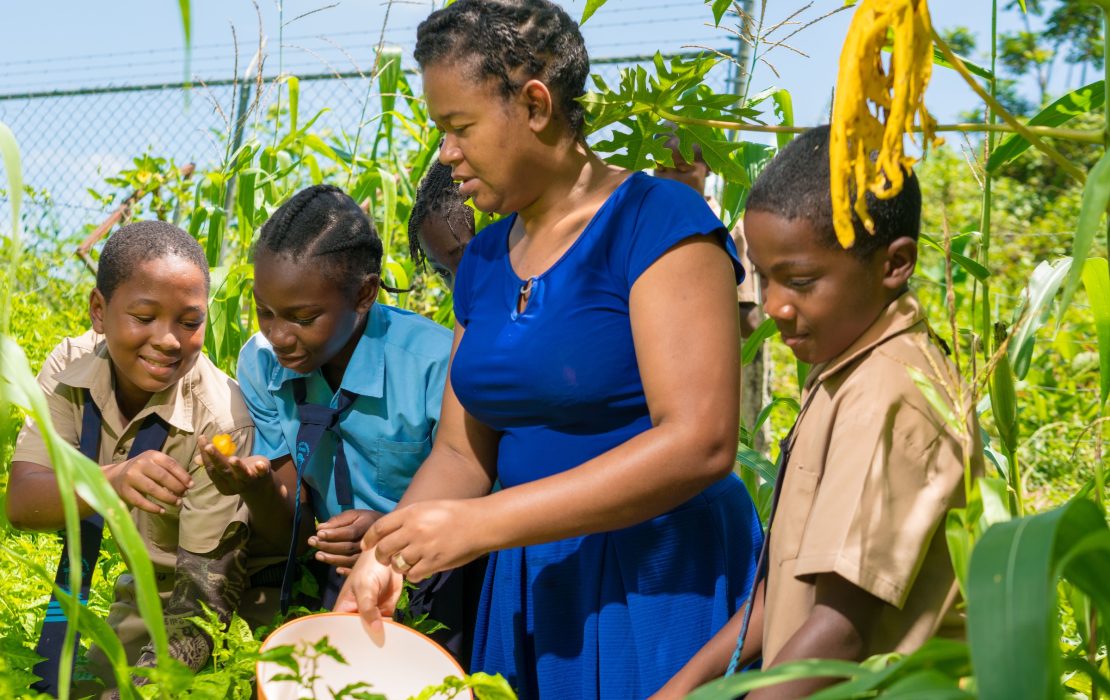
A green growth scenario would bring greater prosperity to women and young people in Jamaica. Photo: UNDP Jamaica / Talk Up Yout Media

Energy efficiency measures help protect vulnerable populations in Bosnia and Herzegovina. Photo: UNDP in Bosnia and Herzegovina
How does UNDP support countries on advancing their just transitions?
With a broad mandate on sustainable development and poverty reduction, UNDP is providing holistic solutions to countries seeking to integrate equity, justice and just transition approaches in climate action.
This support is anchored in five key entry points:
- Conducting qualitative and quantitative assessments on transition impacts;
- Enhancing social dialogue and stakeholder engagement;
- Strengthening institutions, policies and technical capacities;
- Developing measurement, reporting and verification (MRV) frameworks;
- Accessing transition finance.
Through its flagship Climate Promise, UNDP is helping countries connect the dots between climate action, social inclusion, gender equality and sustainable development. To date, UNDP has supported over 72 countries and territories to advance just transition across these areas.
Côte d’Ivoire has embedded just transition principles in its latest national climate plan, with support from UNDP and broad consultations with local authorities, youth, women, the private sector and civil society. Recognizing that climate action will reshape production, consumption and labour markets, a dedicated just transition chapter in the NDC outlines principles, strategies and measures that advance social dialogue mechanisms, gender equality and territorial implementation, while promoting green jobs, social protection and capacity-building.
With support from UNDP and the International Labour Organization (ILO), Jamaica created a green job assessment model to identify the social, employment and economic impacts of transitioning to a low-carbon, climate-resilient economy. The model revealed that, in addition to the benefits related to cutting emissions and reducing dependency on fossil fuels, a green growth scenario could positively impact GDP, generating up to 8,000 new jobs, including more jobs available for women and young people. These findings can help inform policy makers and give them the confidence that integrating just transition principles in climate action can support decent work, social inclusion and economic growth.
As part of Bosnia and Herzegovina’s efforts to decarbonize, UNDP helped retrofit public buildings to increase energy efficiency and cut emissions, while embedding a just transition approach. The project strengthened energy management across 7,099 public buildings, created 8,381 green jobs, and mobilized over US$92.5 million in co-financing. By combining emission reductions with inclusive employment, skills development and locally anchored economic benefits, this work demonstrates how climate action can directly support a fair and development-centred transition.