
0.03%
Share of global GHG emissions
Based on data from Climate Watch (CAIT 2022), developed and maintained by the World Resources Institute. #76
Climate Vulnerability Index ranking
A higher number means a higher vulnerability to climate change. Based on the ND-GAIN Index (2023), developed by the University of Notre Dame. #57
Human Development Index ranking
A lower number means a better human development score. Based on the Human Development Index (2023), developed by UNDP. NDC Status
Georgia submitted its third NDC in March 2026.
Key highlights from the NDC
- Georgia's third NDC extends the timeline of its climate targets to 2035 and aligns more closely with national policy frameworks.
- The NDC adopts a whole-of-society approach, integrating mitigation, adaptation, and socio-economic priorities.
- Georgia commits to an economy-wide absolute emissions reduction target of 47 percent below 1990 levels by 2030, increasing to 50 percent by 2035, covering all major sectors (energy, transport, industry, buildings, agriculture, waste, and Land Use, Land-Use Change, and Forestry - LULUCF) and greenhouse gases.
- The NDC clearly signals that achieving higher ambition depends on access to climate finance and cooperative approaches, including under Article 6.
- The mitigation framework is closely aligned with national policy instruments, including the Climate Change Mitigation Strategy and Action Plan and the National Energy and Climate Plan. Sector-specific targets and measures are elaborated across key emitting sectors, with an emphasis on energy transition, transport decarbonization, and sustainable land use.
- Adaptation is treated as core priority, with measures integrated into the National Adaptation Plan. Priority actions target vulnerable sectors such as water, agriculture, health, ecosystems, and coastal zones. The NDC emphasizes risk-informed planning, early warning systems, and social protection mechanisms, particularly for vulnerable groups.
- The NDC embeds cross-cutting elements, including gender equality and social inclusion. a human rights-based approach. and a just transition framework, with targeted support for vulnerable populations and green job creation. It also shows clear alignment with biodiversity priorities and the NBSAP, particularly through ecosystem resilience and protected areas expansion.
- The development of Georgia's third NDC was supported by UNDP under the Climate Promise, contributing to sectoral analysis of adaptation and mitigation targets, stakeholder engagement, and alignment with international reporting frameworks.
How UNDP’s Climate Promise is helping Georgia
The Climate Promise is being delivered in collaboration with key partners.











Latest Updates
See allClimate information and early warning systems underpin risk-informed development and adaptation planning.
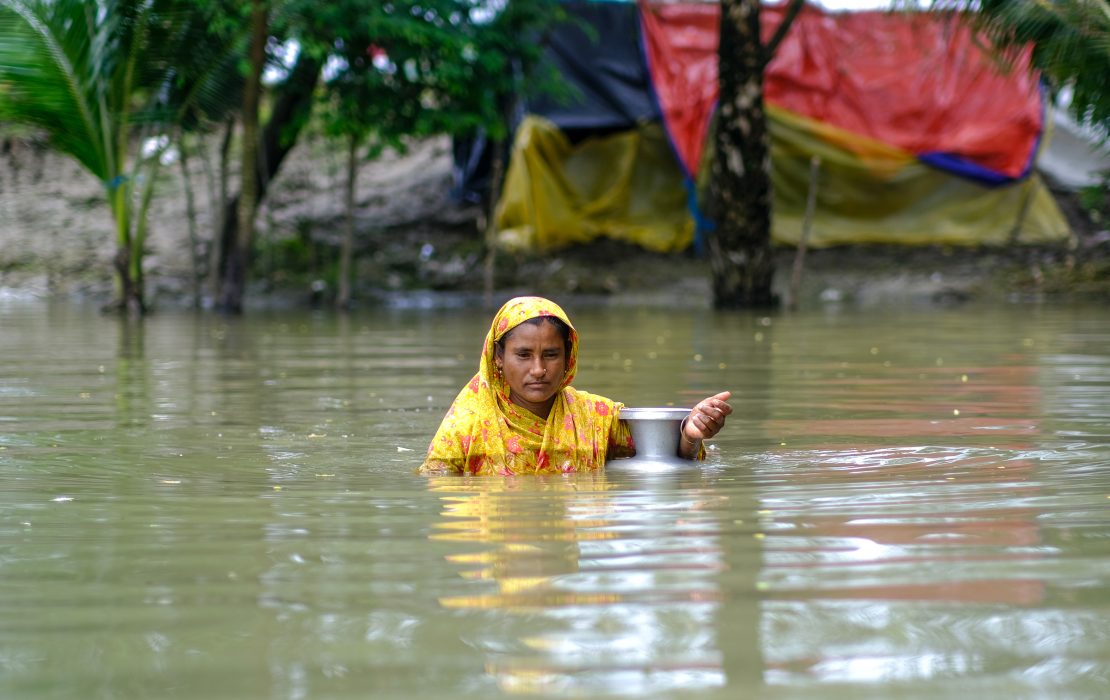
Georgia, Moldova, Serbia, Ukraine and Uzbekistan are using their national climate plans to create green jobs and build more resilient communities.
Climate Action Explained takes viewers on a world tour that proves meaningful climate action is possible.

Latest Publications
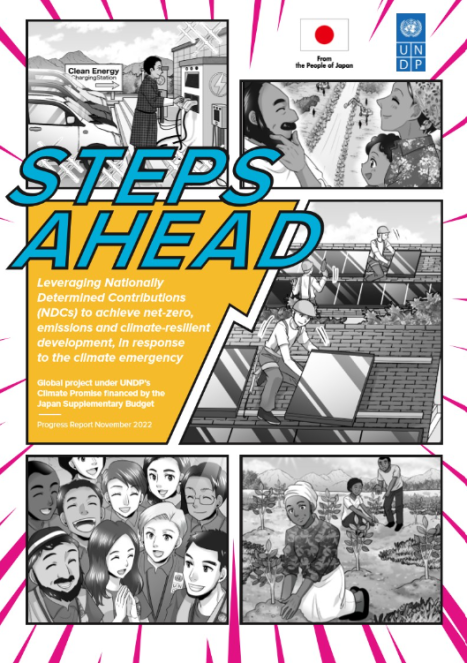
See allA progress report on the Japan-funded project being implemented in 23 countries and territories under the Climate Promise initiative.